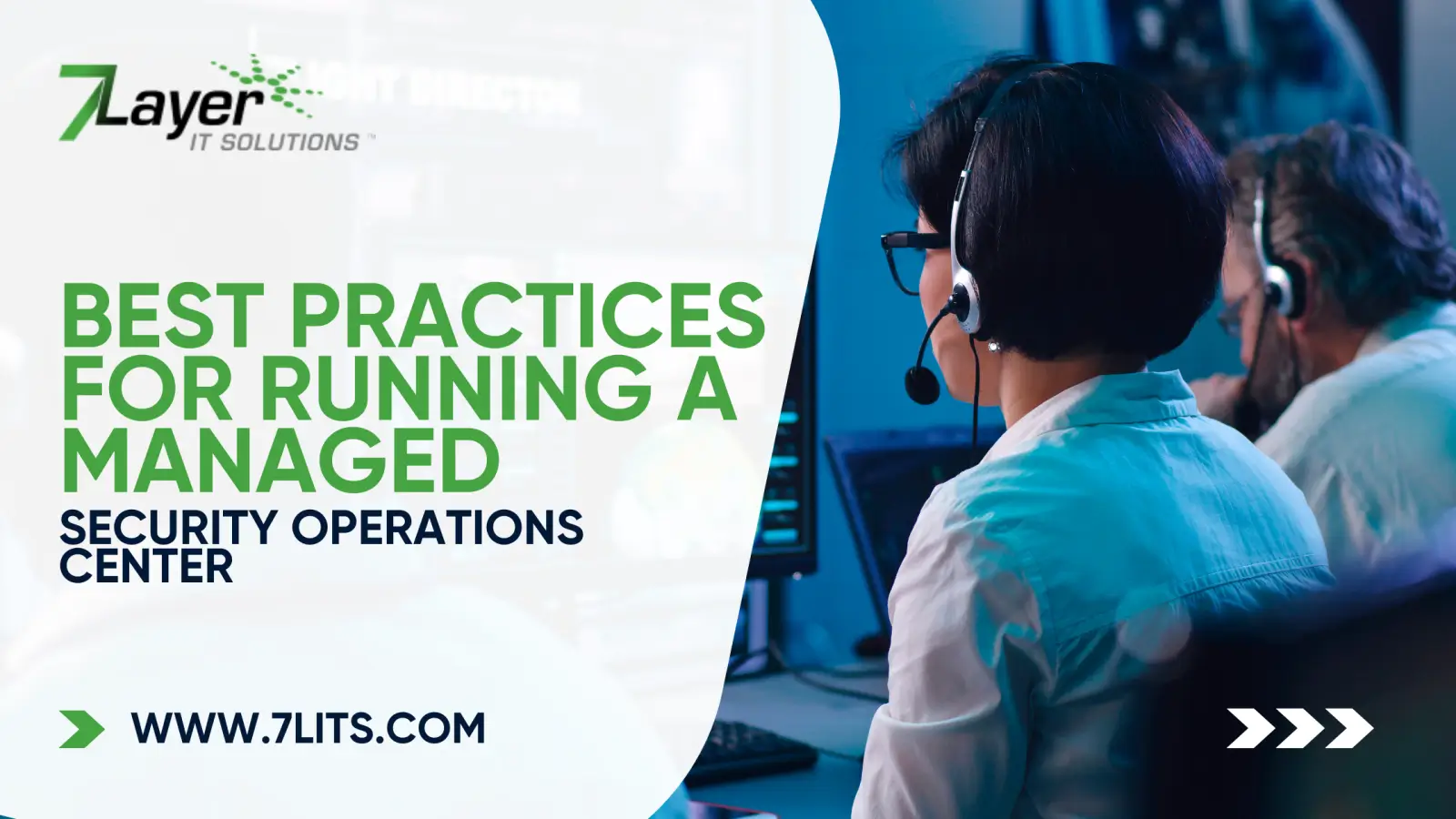
In a digital world where cyberattacks are no longer a matter of "if" but "when", businesses must prioritize proactive defense strategies. Enter the Managed Security Operations Center (SOC) — the command center for cyber threat detection, response, and mitigation.
A well-run SOC is not just about fancy tools and blinking dashboards; it's about people, processes, and precision. In this blog, we'll explore best practices for building and running a high-performing SOC, whether you're managing it in-house or leveraging SOC as a Service.
What Is a Managed Security Operations Center?
A Managed SOC is a centralized unit that continuously monitors, detects, analyzes, and responds to cybersecurity threats and incidents. It combines people, processes, and technologies to defend an organization's digital infrastructure around the clock.
Key components include:
- Security Event Management tools (e.g., SIEM platforms)
- Real-time monitoring and alerting
- Incident response and remediation
- Threat Hunting for advanced threat detection
- Compliance reporting and documentation
Organizations may operate a SOC internally or partner with experts to deliver these services externally — commonly known as SOC as a Service.
Why Every Business Needs a SOC
Cyber threats evolve rapidly. With ransomware, phishing, insider threats, and nation-state actors targeting businesses of all sizes, relying solely on firewalls and antivirus isn't enough.
An effective SOC provides:
- 24/7 monitoring and protection
- Faster incident detection and response
- Regulatory compliance (HIPAA, PCI-DSS, etc.)
- Early threat warnings and analysis
- Reduced business downtime and damage control
Think of a Managed SOC as a business's cybersecurity nerve center — where situational awareness meets operational resilience.
Best Practices for Operating a World-Class SOC
Define Clear Objectives & Metrics
Before building or scaling your SOC, define what success looks like. This could include goals like:
- Reducing Mean Time to Detect (MTTD)
- Achieving compliance benchmarks
- Improving threat response times
- Lowering false positives
Use these goals to guide your strategy, budget, and staffing model.
Leverage a Modern Technology Stack
To handle massive amounts of logs and events, SOCs must be powered by advanced tools such as:
- SIEM (Security Information and Event Management) for data aggregation and real-time alerts
- SOAR (Security Orchestration, Automation, and Response) to streamline and automate response workflows
- EDR/XDR (Endpoint & Extended Detection and Response) to monitor endpoint behavior
- Threat Intelligence feeds for context-aware detection
These tools must be well-integrated to support effective Security Event Management.
Enable Continuous Threat Hunting
Threat Hunting is the proactive process of seeking out hidden threats that evade automated defenses. Unlike traditional detection, it relies on skilled analysts identifying suspicious behavior before damage is done.
Best practices include:
- Hypothesis-based analysis
- Leveraging machine learning and behavior analytics
- Reviewing endpoint, network, and cloud activity
A mature SOC makes Threat Hunting a core part of its strategy — not an afterthought
Missed our previous blog? Read: How Structured Cabling Improves Network Performance
Automate Repetitive Tasks
Automation is crucial for reducing alert fatigue and speeding up response times. Use SOAR tools to automate:
- Triage of low-level alerts
- Alert enrichment with contextual data
- Execution of predefined playbooks
- Escalation processes
This allows analysts to focus on higher-level investigations and real threats.
Build a Skilled, Tiered Analyst Team
A SOC is only as strong as its people. Successful centers invest in:
- Tier 1 Analysts for triage and initial response
- Tier 2 Analysts for deeper threat investigation
- Tier 3 Analysts for threat hunting and remediation
- A SOC Manager to oversee strategy and operations
Whether in-house or outsourced, continuous training is key to staying ahead of evolving threats.
Document and Test Incident Response Plans
A clear and practiced Incident Response Plan (IRP) ensures that when a threat arises, everyone knows their role. Include:
- Detection and classification workflows
- Response timelines and escalation steps
- Roles and responsibilities
- Communication protocols
- Post-incident reviews
Conduct regular tabletop exercises to evaluate readiness.
Prioritize Visibility and Log Management
Lack of visibility is the SOC's biggest blind spot. Ensure your systems are collecting and centralizing logs from:
- Firewalls
- Email servers
- Cloud platforms
- Endpoints and mobile devices
- Applications and databases
The broader your telemetry, the better your Security Event Management becomes.
Ensure 24/7 Coverage
Cyberattacks don't respect time zones. A 24/7 monitoring strategy is critical for real-time response and uninterrupted protection.
If building around-the-clock capabilities in-house isn't feasible, consider outsourcing with a trusted SOC as a Service provider that guarantees global coverage.
Align With Compliance & Governance Standards
An effective SOC supports your business's GRC (Governance, Risk, and Compliance) obligations. Ensure your SOC can produce audit-ready reports and enforce:
- Access controls
- Data retention
- Policy compliance
- Risk assessments
This is especially important in regulated industries like finance, healthcare, and government.
Measure Performance with the Right KPIs
Track key performance indicators such as:
- Mean Time to Detect (MTTD)
- Mean Time to Respond (MTTR)
- Volume of alerts handled
- Escalation rates
- False positive/negative ratios
These insights help continuously improve and justify the SOC's business value.
SOC as a Service: A Smart Alternative
Not all businesses can afford to build and manage a SOC in-house — and they don't have to. With SOC as a Service, you gain:
- Expert staffing and management
- Access to top-tier tools without the capital expense
- Scalable solutions as your business grows
- 24/7 protection backed by SLAs
- Threat intelligence and compliance built in
At 7 Layer IT Solutions, our SOC-as-a-Service offering gives you enterprise-grade security tailored to your unique needs.
Final Thoughts
Running a successful Managed Security Operations Center requires more than just tools — it demands strategy, talent, and continuous evolution. By implementing these best practices, businesses can better defend against threats, reduce response times, and build long-term cyber resilience.
Whether you're building your first SOC or optimizing an existing one, 7 Layer IT Solutions is here to help you stay secure, smart, and scalable.